Einstein Quote

"A human being is a part of the whole, called by us, "Universe," a part limited in time and space. He experiences himself, his thoughts and feelings as something separated from the rest -- a kind of optical delusion of his consciousness.

This delusion is a kind of prison for us, restricting us to our personal desires and to affection for a few persons nearest to us. Our task must be to free ourselves from this prison by widening our circle of compassion to embrace all living creatures and the whole of nature in its beauty.
Nobody is able to achieve this completely, but the striving for such achievement is in itself a part of the liberation and a foundation for inner security." Albert Einstein - (1879-1955)
Psilocybin should only be taken with a spiritual mindset in a supportive environment.
Be sure to continue reading with "Older Posts" at bottom of page.

Saturday, January 30, 2016

Comment on use of transcutaneous trigeminal nerve stimulation for PTSD

Exploring non-pharmacologic means to treat PTSD will always  get a thumbs up from me.  The results of a recent Clinical Trial exploring the use of transcutaneous trigeminal nerve stimulation was just published in the journal Neuromodulation: Technology at the Neural Interface. Study results were modest but what is most intriguing is how stimulating the trigeminal nerve would have a positive effect on PTSD and also, from previous studies, positive effects on reducing the frequency of epileptic seizures.

Monarch™ eTNS™
Looking at the Neurosigma website, the company who's product the Monarch™ eTNS™ is behind this research, they point out that the trigeminal nerve is the largest cranial nerve.  Yes it is considered by some
criteria to be "the largest" but the vagus nerve is the longest cranial nerve and by far the most complex.  The vagus nerve supplies vital organs, is the primary parasympathetic nerve, plays a vital role in our immune system, and helps to control systemic inflammation.

Also, they do not call the superficial stimulation of the trigeminal nerve with the Monarch transcutaneous stimulation but refer to it as external stimulation.  I'm wondering if that is for marketing purposes.  Why purchase a Monarch if a similar function can be served by a transcutaneous nerve stimulator?

As to how the trigeminal nerve, a nerve whose primary function is for sensory and motor functions in the face and mouth regions, can have such systemic effects on complex disorders such as PTSD and epilepsy, the answer may come from tracing the path of the trigeminal nerve. The nucleus tractus solitarius, located in the dorsomedial medulla, does receive a few projections from the trigeminal nerve.  The Neurosigma website points this out.  They also state the involvement of the locus coeruleus in the proposed mechanism for the effects of trigeminal nerve stimulation. Again, there are some connections. The vagus nerve supplies dense connections to the these structures, not just a few fibers.

Regarding the proposed involvement of the locus coeruleus in the etiology of trigeminal nerve stimulation, therapy, recent research has shown that the antidepressant effects of vagus nerve stimulation (VNS) is via the locus coeruleus (LC).  Here are some highlights of that study (Journal of Psychiatric Research Sep 2015):
  • VNS has an antidepressant-like effect in the forced swim test.
  • Lesioning the LC abolishes this antidepressant-like effect of VNS.
  • Our results support a key role for the LC in the antidepressant mechanism of VNS.
  • The results of this study demonstrate that the noradrenergic neurons from the LC play an important role in the antidepressant-like effect of VNS. 

Just last week (Feb 16, 2016) a new study has added a key piece to the Alzheimer's puzzle by demonstrating the locus coeruleus to be 'ground zero' in the etiology of Alzheimer's:

Researchers highlight brain region as 'ground zero' of Alzheimer's disease
The locus coeruleus is a small, bluish part of the brainstem that releases norepinephrine, the neurotransmitter responsible for regulating heart rate, attention, memory, and cognition. Its cells, or neurons, send branch-like axons throughout much of the brain and help regulate blood vessel activity. Its high interconnectedness may make it more susceptible to the effects of toxins and infections compared to other brain regions, said lead author Mara Mather.

Mather, Professor of Gerontology and Psychology at the University of Southern California Leonard Davis School of Gerontology, added that the locus coeruleus is the first brain region to show tau pathology—the slow-spreading tangles of protein that can later become telltale signs of Alzheimer's disease. Though not everyone will get Alzheimer's, autopsy results indicate that most people have some initial indications of tau pathology in the locus coeruleus by early adulthood, she added. Trends in Cognitive Sciences March 2016

It appears to me to be quite clear that transcutaneous vagus nerve stimulation (see previous post) could play a key role in protection from Alzheimer's disease and there is a new Clinical Trial starting very soon to test that hypothesis. Details from the Clinical Trial:
There are three aims in this project:

  1. To investigate how the functional interaction between the locus coeruleus and other brain areas, in particular the medial temporal lobe areas, during memory processes (encoding, consolidation and retrieval) change with development of Alzheimer's disease.
  2. To investigate associations between noradrenaline, memory performance and brain functioning. The investigators aim to investigate how acute noradrenalin levels change during the different memory processes and whether or not this is beneficial for performance. Furthermore, the investigators will investigate whether this interaction between noradrenalin, memory performance and brain functioning is different healthy older individuals (n =35) or patients with prodromal Alzheimer's disease (n =35).
  3. To investigate the underlying neural network changes during transcutaneous vagus nerve stimulation. The investigators will focus on differences in functional connectivity between the locus coeruleus and the medial temporal lobe areas in healthy older individuals and prodromal Alzheimer's disease patients. An experimental condition will be compared with a sham condition in a pseudo-randomized cross-over design.

After some initial excitement regarding the potential of trigeminal nerve stimulation, it appears as though stimulating the trigeminal nerve is just acting as a middleman to achieve the same or better effects that can be achieved using vagus nerve stimulation.  Neurosigma does state "The NTS is a key regulator of the parasympathetic, or “rest and digest” nervous system, and provides a direct connection between the trigeminal and vagus nerve systems." So lets just cut out the BS and go for the gold.

This is not a technology I would invest in.  Best bet, in my opinion, cut out the middleman and go right to the source - stimulate the vagus nerve to treat PTSD.  DARPA, the Defense Advanced Research Project Agency has been funding research on vagus nerve stimulation to treat PTSD. DARPA's research appears to focus on the vagus nerve with no mention of the trigeminal nerve. As for a potential new Clinical Trial, perhaps stimulating the auricular branch of the vagus nerve and the trigeminal nerve simultaneously would provide some sort of synergist effect as opposed to just stimulating the vagus nerve.

Bindi and Third Eye
Another possible explanation for the positive effects of transcutaneous trigeminal nerve stimulation is it's effect on the "third eye" as the locations on the forehead are the same..  The "third eye" is a mystical concept that turns out to have real evolutionary significance. There are some 'primitive' extant reptiles such as the Tuatara which has a parietal eye that in 'higher' vertebrates became the pineal gland. The FDA approved Cefaly for migraines appears to be capitalizing on this concept by its design. Dimethyltryptamine (DMT) has been shown to be produced by the mammalian pineal gland. Interesting!

The Cefaly trigeminal nerve stimulator for migraines - Third Eye?

Monday, January 18, 2016

Transcendental Meditation for treating PTSD

A new article in Military Medicine (Jan 2016) details research performed by military medical personnel at Dwight David Eisenhower Army Medical Center's Traumatic Brain Injury Clinic at Fort Gordon, Georgia. 74 active-duty service members with PTSD or anxiety disorder were divided into experimental and control groups with both receiving treatment as usual and the experimental group also receiving training in and practice of Transcendental Meditation (TM).  The experimental group receiving the extra TM training and practice were able to "reduce or even eliminate their psychotropic medication and get better control of their often-debilitating symptoms."

While I applaud their approach and the willingness of military personnel to undertake such timely research, I do have a few issues with their work.  First, it appears the control group did not receive an equal amount of extra staff attention and were not assigned a task that would also take an equal amount of time daily to do something akin to just sitting quietly for 20 minutes twice a day.  This was not a properly controlled study and does little to show anything special about TM.

Not that there isn't anything special about TM, it is just that this study design fails to show it. What David Lynch is doing with the Operation Warrior Wellness (OWW) program is highly commendable. Maharishi Mahesh Yogi's efforts to spread the practice of meditation globally should have won him the Nobel Peace Prize and his book Maharishi Mahesh Yogi on the Bhagavad-Gita : A New Translation and Commentary, Chapters 1-6 was a classic.  It is unfortunate he did not have time to translate the last 12 chapters. According to TM, the key is to 'be without the three gunas'. Being without the three gunas is, in essence, a state of non-judgemental mindfulness.

Still, I'm not convinced that TM has any special edge over other meditation techniques.  This is not a competition.  Comparing gurus is one step in the direction of cutting off someone's head because they do not believe what you believe. Just getting more people to meditate and quiet their sympathetic nervous system and default mode network would be a major step forward towards saving humanity from our possible path of self-destruction.

EMWave2
If these researchers want to be on the cutting edge of research in this field, there are at least two additional steps they can take. First they can supplement the effectiveness of participants meditation progress using heart rate variability biofeedback (HRV-b).  Having instant feedback on how you are progressing is extremely valuable. Increasing heart rate variability through biofeedback has been shown to improve the balance between the parasympathetic and sympathetic nervous system. There is a relatively inexpensive unit, the EMWave2 available from HeartMath that has been utilized in many studies to include some by the military.

My personal experience with the EMwave2 has been positive.  It's cost is not prohibitive ($200 dollars) although its durability can be improved.  My units tend to peter-out after about 1 year of fairly constant use. The best aspect of this form of non-intrusive biofeedback is its ability to keep you in a state of mindfulness.  When I find my mind wandering, the EMWave2 informs me which makes it a great adjunct to meditation.

I'm not sure if the EMWave2 uses a linear or non-linear algorithm to monitor heart rate variability (they will not divulge this information). The output it provides lets you know when the parasympathetic and sympathetic nervous systems are in balance and is referred to as coherence.

Vagus nerve in green
Electrical stimulation of the auricular branch of the vagus nerve has been shown to decrease sympathetic nerve activity, to increase vagal tone, and to activate the cholinergic anti-inflammatory pathway. The ear is the only place the vagus nerve is superficial and able to be stimulated non-invasively. The increase in vagal tone is achieved without the use of medication and is non-invasive. Decreasing systemic inflammation via the cholinergic anti-inflammatory pathway and increasing vagal tone have shown positive results for treating depression, chronic pain, PTSD, cancer, atrial fibrillation, stroke, heart failure, rheumatoid arthritis to mention a few. The cholinergic anti-inflammatory pathway is a recently described, vital part of the immune system who's role in various disease states is only recently being ascertained.

Vagus nerve stimulation
 with
TENS electrodes
Electrical stimulation of the auricular branch of the vagus nerve has great potential to play a key role in treating many diseases of modern society, it can modulate the default mode network, and that it can be manipulated without drugs is a big plus. What is so amazing is very few physicians have an interest in this process even though it involves a key part of our immune system.  I guess when some drug company comes out with a drug they can write a prescription for then they will start showing some interest.

DARPA, the Defense Advanced Research Project Agency, inventors of the internet (sorry Al Gore) and the premier agency for United States military research, has been funding research on vagus nerve stimulation to treat PTSD. From their website Work Begins to Support Self-Healing of Body and Mind:

"A team at the University of Texas, Dallas, led by Robert Rennaker and Michael Kilgard, will examine the use of vagal nerve stimulation to induce neural plasticity for the treatment of post-traumatic stress. As envisioned, stimulation could enhance learned behavioral responses that reduce fear and anxiety when presented with traumatic cues. Dr. Rennaker is a U.S. Marine Corps veteran who served in Liberia, Kuwait and Yugoslavia."

Not a recommendation but this product found on Amazon may serve the purpose of stimulating the auricular branch of the vagus nerve.

New article from Biological Psychiatry (Feb 2016) from Harvard, Medical College of Wisconsin, and China titled Transcutaneous Vagus Nerve Stimulation Modulates Default Mode Network in Major Depressive Disorder involves stimulation of the auricular branch of the vagus nerve to treat depression and demonstrates its effect on the default mode network.

There is new research involving activation of the locus coeruleus via transcutaneous vagus nerve stimulation and it role in prevention of Alzheimer's.  See details in the next post.

Friday, January 8, 2016

Quiet the Default Mode Network and save the world

It has been demonstrated with fMRI that mindfulness meditation and psilocybin (a must read) both decrease activity in the default mode network and both can promote the experience of oneness, a sense of timelessness, a profound sense of sacredness, and can result in an overall decrease in anxiety. These are qualities that are lacking in the present efforts to deal effectively with global issues of terrorism, climate change, and extreme political polarization.

A new article in the journal Cerebral Cortex used fMRIs to measure brain activities in 3 different cultural groups (Chinese, American and Iranian) while they were reacting to narratives that involved core, protected beliefs. Researchers found increased activity in the “default mode network” when these core, protected values were contemplated.

A press release from the University of Southern California details key aspects of the study.  The press release concludes:

It’s not yet clear whether a value either is or is not protected, or whether the sacredness of a value is on a sliding scale. But in a nation where political beliefs are growing more polarized and entrenched, it’s important to understand what biological processes lie at the root of these values, Kaplan said.

“People will often hold political values as protected values and protected values are at the root of many political conflicts around the world, which is why they’re interesting to us,” he said.

Just a reminder, taking psilocybin is not a game.  It must be done for the right reasons and with proper supervision.  Set and Setting are key.

This one has a very chaotic, out of control default mode network and would not be good for world peace.  He also can not spell and has difficulty with complex issues which limits him to derogatory, grade school level one liners. These characteristics remind me of a former President except this one is not as genial.  Early Alzheimer's?

This gentleman has a very quiet default mode network which is reflected in his face, in his eyes.  He does not take himself too seriously and his ego is not an obstacle to world peace.  Yoda's eyes were patterned after Einstein's eyes.

Saturday, December 19, 2015

Psilocybin: a single dose relieves Existential Distress in cancer patients

Location: 2015 Meeting of the American College of Neuropsychopharmacology
Date: 10 December 2015
Synopsis: Dr. Roland Griffiths (Johns Hopkins) presented some pre-publication results of a study that utilized psilocybin to reduce the anxiety and depression that frequently accompanies patients with a life threatening cancer diagnosis. Patients receiving relatively high doses of psilocybin sufficient to induce changes in perception and to frequent a mystical experience reported significantly decreased levels of anxiety and depression compared with patients that received a low dose of the drug. The positive effects on mood were still present in those patients at a 6 month follow-up. Both Johns Hopkins and NYU have recently completed studies with cancer patients given therapeutic doses of psilocybin although there were nuances that made each study unique.  My best guess is their research may be published in early 2016.  It is my hope they will both be published at the same time, separately but in the same journal/issue for maximum public/media impact.

The following is from the meeting abstract found in Neuropsychopharmacology (2015) 40, S1–S105:

Methods: The study used a randomized, double-blind, cross-over design to investigate the acute and sustained effects of a very low psilocybin dose (1 or 3 mg/70 kg) vs. a moderate-high dose (22 or 30 mg/70 kg). Instructions to participants and staff minimized expectancy effects. 51 patients with a life-threatening cancer diagnosis who had symptoms of anxiety or depression received a low or high dose of psilocybin in counterbalanced order with about 5 weeks between sessions and a final follow up at 6 months. For this preliminary analysis, results between the low (n=25) and high (n=26) dose groups on the first session were compared. Enduring effects were assessed at a 6 month follow-up.
Results: On session days, the high dose group showed substantially greater effects including perceptual changes, mystical-type subjective experiences, and labile mood. At the 5-week follow-up the high dose group showed significantly lower anxiety (STAI Trait Anxiety, HAM-A) and depression (BDI, HAM-D) compared to the low dose group (effect size mean and range 0.98, 0.60-1.30). The participants attributed significantly greater positive changes in attitudes about life/self, positive social effects, and positive behavior changes to the experience, and a higher percentage reported the experience to be among the 5 most personally meaningful of their lives (54% vs. 16%). Total mystical experience scores at the end of the session showed significant negative correlations with the above measures of anxiety and depression at 5 weeks. Partial correlation analysis showed this relationship remained significant after controlling for ratings of intensity of drug effect. The decreases in anxiety and depression were sustained at 6 month follow-up.
Conclusions: A single moderate-high dose of psilocybin, when administered under supportive conditions to carefully screened and prepared participants, can produce substantial and enduring decreases in anxiety and depression in patients with a life-threatening cancer diagnosis.

My assessment: Psilocybin is non-addicting with less toxicity than caffeine. There are no currently available medications that improve cancer patient's mental health this significantly and it only has to be taken once or twice with the proper Set and Setting. Cancer patients with a life threatening diagnosis often experience a profound Existential Distress as do those with PTSD so it is reasonable to expect psilocybin given in a therapeutic dose in a supportive environment will provide a similar benefit to those with PTSD.

DoD and/or VA researchers, the science is there, it just needs to be followed.  Those with PTSD need your help and courage.

A New Understanding: The Science of Psilocybin in an excellent 1 hour documentary that profiles two cancer patients, both now deceased, who had experienced profound benefit from participating in the psilocybin trials being conducted at Johns Hopkins, UCLA and NYU. A panel discussion following the screening of the documentary 'A New Understanding: The Science of Psilocybin' is 1.5 hours long and features many of the researchers producing this life altering knowledge. During the panel discussion, it was mentioned that an application for compassionate use was submitted to the FDA for cancer patient to be allowed access to psilocybin but they were doubtful it would be passed.

“Man is not destroyed by suffering. He is destroyed by suffering without meaning.” Victor Frankl

Saturday, December 5, 2015

Microdosing psilocybin

The focus of this website is to encourage psilocybin research for the treatment of PTSD. However, there has been numerous news articles recently exploring the use of microdoses of psilocybin and other 5-HT2A receptor agonists.  Reported benefits include lifting of depression, increased energy, and increased creativity. Two of these articles have been from prominent, traditional publications:
James Fadiman Ph.D., who has been involved with psychedelic research since the 1960's, published a book in 2011 titled The Psychedelic Explorer's Guide: Safe, Therapeutic, and Sacred Journeys.  One chapter of the book is devoted to microdosing.

I'm not sure at what point a "low dose" becomes a "microdose" but the concepts are similar.  In an earlier post, "Comment on low dose psilocybin for treatment of PTSD", I discussed how The article by Catlow BJ et al. (Exp Brain Res. 2013 Jun 2. [Epub ahead of print]), demonstrates how a low dose (0.1 mg/kg) of psilocybin helps mice overcome a conditioned fear response significantly quicker than a medium (0.5 mg/kg) or high dose of psilocybin (1.0 mg/kg) and results in hippocampal neurogenesis while the higher doses result in a decrease in cell survival.

Antidepressant medication known as SSRIs (serotonin reuptake reuptake inhibitors) are thought to work by increasing synaptogenesis/neurogenesis.  Given the results of the Catlow study above, it is reasonable to conclude that microdosing also results in an increase in hippocampal synaptogenesis/neurogenesis as well.

The good thing about microdosing with psilocybin is that no prescription is required.  The bad thing about microdosing with psilocybin is that no prescription is available. This discrepancy will change when Federal authorities move psychedelics from Schedule I to Schedule II status. Reclassification as schedule II will allow unimpeded research to determine how it works, effective dosages, and potential side effects.  Since a significant portion of the American public is attempting to work this out themselves, professional guidance would be prudent.

A recent article in the Journal of the American Medical Association (Aug 4, 2015) found that current treatments for post-traumatic stress disorder (PTSD) such as Prolonged Exposure Therapy and Cognitive Processing Therapy are not proving effective. "There is a need for improvement in existing PTSD treatments and for development and testing of novel evidence-based treatments, both trauma-focused and non–trauma-focused".   Psilocybin is a novel treatment that deserves to be investigated as it holds great promise to end the suffering of many with PTSD when provided with appropriate Set and Setting. The therapeutic psilocybin sessions could be couched within concurrent Cognitive Behavioral Therapy to allow the therapeutic integration of the psychedelic/spiritual experience. The JAMA article above has been cited by (Google Scholar).

NSI-189
Another promising antidepressant, NSI-189, has just completed a phase 1B Clinical Trial, led by Massachusetts General Hospital (MGH) investigators with the results published in Molecular Psychiatry on 8 December 2015 (PDF). What makes this compound especially promising is it a nicotinamide derivative that was first developed as part of a Defense Advanced Research Projects Agency (DARPA) funded program and it promotes hippocampal neurogenesis. Niacin, or vitamin B3, is rapidly converted into nicotinamide after ingestion.

Astaxanthin and exercise are two additional adjuncts to hippocampal neurogenesis.

Choosing compounds that are closely related to natural, essential nutrients and avoiding halogenated hydrocarbons may be a wise choice.  Many pharmaceutical companies will add a fluorine or chlorine atom to an organic compound to give it a specific shape.  The addition of a halogen to an organic compound will frequently increase it's toxicity. "Unlike the aromatic or aliphatic hydrocarbons, the halogenated hydrocarbons tend to cause a wider range of toxicity" (source Medscape). A good method of determining if drugs have added halogens is to look in Wikipedia for the chemical structure of to Google the drug name with the added term 'structure' in the search.  Next choose 'Images' as the Google option.  Examples:

NSI-189 (Wikipedia)

NSI-189 (Google Images)

If you own a pet and treat them for fleas, you may want to stay away from Frontline for fleas. This is the 'Mother of all halogenated hydrocarbons' and I'm wondering if it doesn't increase cancer rates significantly.

Sunday, November 29, 2015

Veterans Administration researcher promotes psilocybin research

Richard Andrew Sewell M.D with the Department of Psychiatry, West Haven Veterans Affairs Hospital, West Haven, CT and others have just published an article in the Journal of Psychoactive Drugs titled:

Indoleamine Hallucinogens in Cluster Headache: Results of the Clusterbusters Medication Use Survey
Cluster headache is one of the most debilitating pain syndromes. A significant number of patients are refractory to conventional therapies. The Clusterbusters.org medication use survey sought to characterize the effects of both conventional and alternative medications used in cluster headache. Participants were recruited from cluster headache websites and headache clinics. The final analysis included responses from 496 participants. The survey was modeled after previously published surveys and was available online. Most responses were chosen from a list, though others were free-texted. Conventional abortive and preventative medications were identified and their efficacies agreed with those previously published. The indoleamine hallucinogens, psilocybin, lysergic acid diethylamide, and lysergic acid amide, were comparable to or more efficacious than most conventional medications. These agents were also perceived to shorten/abort a cluster period and bring chronic cluster headache into remission more so than conventional medications. Furthermore, infrequent and non-hallucinogenic doses were reported to be efficacious. Findings provide additional evidence that several indoleamine hallucinogens are rated as effective in treating cluster headache. These data reinforce the need for further investigation of the effects of these and related compounds in cluster headache under experimentally controlled settings.
Schindler EA, Gottschalk CH, Weil MJ, Shapiro RE, Wright DA, Sewell RA.
J Psychoactive Drugs. 2015 Nov 23:1-10. [Epub ahead of print]
PMID: 26595349

Just as psilocybin can be "comparable to or more efficacious than most conventional medications" for cluster headaches, psilocybin may be the best medication available for PTSD.  Researchers will not know this if they do not run any Clinical Trials utilizing psilocybin to treat PTSD.

Unfortunately the study was published posthumously for Dr. Sewell who died in 2013 following surgery at Yale-New Haven Hospital. Hats off to this heroic researcher and condolences to his friends and family.

Saturday, November 21, 2015

Groundbreaking Psilocybin Documentary Unravels New Perspectives On Life & Death

"Could psilocybin hold the key to understanding our life and death, and relationship to both? The growing numbers of people that have experienced these compounds profess this - and much more."  PRNewswire

PRNewswire has announced the release of the new documentary A New Understanding: The Science of Psilocybin. The full documentary is no longer available from YouTube. However, the video can be rented or purchased from this website.

On a personal note, I do not make any money from this website and have spent many thousands of dollars on travel, books, and articles as well as time to read and digest information to post.  This is not my profession and I do not get any tax breaks. When you watch your daughter struggle with cancer for 3 years before passing, you come to realize it is not about the money. There is an important message here and it is a shame to have someone put a monetary value on it. When you attempt to turn spiritually into a business it dissipates.

Most cancer patient already face a huge financial burden so lets give them a break.

The documentary profiles two cancer patients, both now deceased, who had experienced profound benefit from participating in the psilocybin trials being conducted at Johns Hopkins, UCLA and NYU.  A 'normal' volunteer from the 2006 Johns Hopkins psilocybin study is also profiled as well as some of the psilocybin researchers from Hopkins, NYU, UCLA, Purdue, and the Imperial College of London.

"Putting words to it cheapens the experience". These words were spoken by Matt Meza as he was trying to explains his psilocybin experience as part of a cancer patient trial.  Those words sum up the documentary for me.  It is obvious the volunteers have gone through a life changing experience, one of a spiritual nature, not an intellectual one, so it can not be described in words.  Spiritual experience tend to evade verbal descriptions.  An excellent book that echos these sentiments is Swami Satchadananda's Beyond Words, a classic by a Spiritual Teacher espousing ageless wisdom.

Considering the very positive effect psilocybin appeared to have on the 'normal' volunteer's marriage, there is a distinct possibility that psilocybin may be very effective as an adjunct to couples therapy.  Of course this is just an N of 1, but still....

An earlier post provides a link to a panel discussion that occurred following the initial screening (14 April 2015) of the documentary 'A new understanding: the science of psilocybin'.  The panel primarily consisted of the same psilocybin researchers in the documentary.

Coming to the conclusion that psilocybin would be as effective for PTSD as it is for patients with a life threatening diagnosis is logical since both deal with a profound existential crisis.  Since the etiologies are similar, effective treatments may share the same similarity.

Overall, I recommend this documentary for anyone who may be experiencing a life threatening illness or for anyone who may someday be facing an imminent death or even a non-imminent death.  Too bad it's not freely available as those experiencing life threatening existential crisis do not need yet another obstacle to overcome.

Saturday, October 31, 2015

New evidence regarding the multicultural use of Psilocybin in ancient times

The Rig Veda (RigVeda) is possibly the oldest religious text in continuous use with its origin dating back to around 1500 BC. The Rig Veda is the oldest of four Vedas, the earliest scriptures of Hinduism and are considered to be sacred texts. Orthodox Indian theologians consider the Vedas to be revelations from ancient sages derived through intense meditation. The Rig Veda is a highly philosophical treatise that deals with the origin of the universe and the nature of god. It consists of ten books (Mandalas) and 10,600 verses. The quote below is similar to something a present day astronomer could ponder in a quiet moment:
   
     Who really knows?
     Who can here proclaim it?
     Whence, whence this creation sprang?
     Gods came later, after the creation of this universe.

     Who then knows whence it has arisen?
     Whether God's will created it, or whether He was mute;
     Only He who is its overseer in highest heaven knows,
     He only knows, or perhaps He does not know.
                                                      —Rig Veda 10.129.6-7

The Ninth Mandala (Soma Mandala) glorifies ingestion of the Soma, a sacred potion of the Vedic religion, who's identity has been much debated.  The sacred potion is obtained from the juicing of the stalk of a "plant" but its origin has been lost with time.  Both Hinduism and Zoroastrianism share a common sacred ritual and name for the "plant" (Zorastrian - Haoma). Possible candidates that have been proposed include an Ephedra species, Amanita muscaria, opium poppy, and Cannabis as well as a Psilocybe species.  Due to the hallucinogenic/entheogenic nature of the Soma experience, it makes sense that Psilocybe is the only likely candidate. Since Psilocybe grows in cow dung, perhaps that is why cows are still considered sacred in India today.

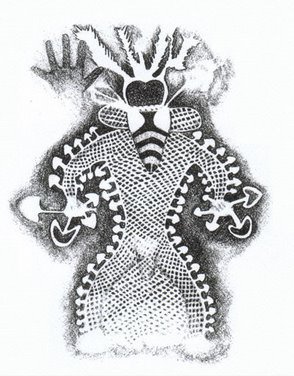
Based on recent research ("We drank Soma, we became immortal" -PDF) published by Dr. Natalia V. Polosmak in Science First Hand (April 2010), the identity of Soma as Psilocybe cubensis appears to have been solidified. Dr. Polosmak is a Russian archaeologist best know for her discovery and analysis of the Ice Maiden mummy.  In the article, Dr. Polosmak describes the 2009 discovery of a carpet, an embroidered cloth that covered the narrow space between the burial chamber walls and coffin, a discovery in Mongolia that dates to the first century BC.

Holding the sacred mushroom
Emboidered on  the carpet are individuals standing attentively around the altar fire. A prominent figure among them is the man on the left, possibly the king himself or a priest, dressed in a smart long embroidered kaftan gaping open at the bottom. He
has a notably expressive face, and his intent look is focused on the mushroom he is holding in both hands.

"Strewn all over the cloth are the depictions of bees and butterflies. Their presence can symbolize the Other World – the world of souls, the world of ancestors, what warriors experience after they have tasted sacred mushrooms".

An article (PDF) from the journal Economic Botany (Feb 2011) describes a cave mural in Spain dating to around 6,000 BC that depicts the first direct evidence for possible ritual use of Psilocybe in prehistoric Europe. From the article conclusion:

Selva Pascuala mural
"We suggest that Viñas’ hypothesis is sound, and the Selva Pascuala mural likely depicts mushrooms, especially neurotropic fungi. Although Psilocybe hispanica presents a probable candidate for the species depicted, as indicated by Guzmán, we emphasize that this identification is tentative, and contingent upon a shamanistic interpretation of the mural."

Neolithic Early Gathers rock art
Dating back to the Neolithic Era 7,000 to 10,000 years BP, Early Gatherers produced a series of remarkable rock art in the Sahara Desert (The oldest representations of hallucinogenic mushrooms in the world (Sahara Desert, 9000-7000 BP); G Samorini - Integration, 1992). From the article: "It is perhaps not a chance occurrence that the areas where examples of rock art are to be found – areas in which it is most often asserted that the use of hallucinogens might have taken place, on the basis of the scenes represented or on the basis of the consideration that this practice might have served as a source of inspiration – are also the areas where the most famous examples are to be found in terms of imagination, mythological significance and polychromy".

Samorini then goes on to write "... it would seem there are at least two species (in the rock art) one of which is small and topped with a ‘papilla’ (a characteristic it would share with most known hallucinogenic Psilocybes) and the other of which is larger (like Boletus or Amanita)".

Lets not leave out the Western Hemisphere cultures. From a 2015 article in the journal Neuroglia, the author writes "Mushroom stones (Psilocybe sp.) dating from 3000 BC have been found in ritual contexts in Mesoamerica" (Hallucinogenic drugs in pre-Columbian Mesoamerican cultures; FJ Carod-Artal - Neurología. 2015 Jan-Feb;30(1):42-9.) The use of psychoactive substances was common in pre-Columbian Mesoamerican societies. Today, local shamans and healers still use them in ritual ceremonies in Mesoamerica.

The importance of these discoveries is the spiritual role Psilocybe has played amongst practitioners of the earliest known sacred traditions - Hinduism, Zoroastrianism, possibly the Mycenean Greeks and in earlier prehistoric times. People today have that same desire for a spiritual/sacred experience to add a sense of unity and peace to their lives.

There is too much suffering in the world. We are possibly on the brink of a profound, global ecological disaster and need all the help we can to muster up a mutual sense of mindfulness, cooperation and openness to the needs of one another to include the other species we share the earth with and to enhance our journey on this spiritual quest.

Saturday, October 10, 2015

Psilocybin and spirituality: treatment for suicidal behavior, PTSD and moral injury

Dr. Marek Kopacz, M.D., Ph.D, is a truly innovative thinker within the Veterans Administration. The VA needs more of these heroic researchers/therapist to help the needs of the many Veterans who are not being adequately treated by current means.  Dr. Kopacz clearly sees the relationship between suicidality, moral injury, and spirituality. A federal researcher promoting research into spiritual issues is very rare and refreshing.  Spirituality does not threaten the separation of Church and State as spirituality is non-denominational, non-judgemental. In this new article (Complement Ther Med. 2016 Feb) Veterans Administration researchers Dr. Kopacz, Dr. Craig Bryan and others advocate for the use of mindfulness meditation to treat moral injury.

Over the past decade, the concept of 'moral injury', first introduced by Dr. Johnathan Shay,  has developed into a workable hypothesis that is showing good potential in facilitating treatment of PTSD and suicide. Dr. Shay, initially a neuroscience researcher, went to work at the Veterans Administration after suffering a stroke himself where he became very impassioned by Veterans issues especially PTSD.  He has since written 2 excellent books on the PTSD in Viet Nam Veterans which follow the theme of Homer's the Iliad and the Odyssey titled Achilles in Vietnam: Combat Trauma and the Undoing of Character and Odysseus in America: Combat Trauma and the Trials of Homecoming.  Dr. Kopacz discusses spirituality and moral injury in a recent podcast from Spirituality Mind Body Institute at Teachers College, Columbia University.

A moral injury 'refers to an injury to an individual's moral conscience resulting from an act of moral transgression which produces profound emotional shame. The concept of moral injury emphasizes the psychological, cultural, and spiritual aspects of trauma'. 'A cognitive dissonance occurs after a perceived moral transgression resulting in stable internal global attributions of blame, followed by the experience of shame, guilt, or anxiety, causing the individual to withdraw from others. The result is increased risk of suicide due to demoralization, self-harming, and self-handicapping behaviors' (Wikipedia). Pulitzer Prize winning journalist David Wood wrote a penetrating series on moral injury present in Iraq and Afghanistan veterans for the Huffington Post.

In the past, I've contributed a number of posts on the role of spirituality in mental health issues. Since I am not a mental health professional, creating this website has been a process of profound discovery for me that is gradually tying together many past experiences.  For instance, in regards to this current post, I first read Johnathan Shay's Odysseus in America in 2006 the same year that Griffith et al. at Johns Hopkins published their seminal study "Psilocybin can occasion mystical-type experiences having substantial and sustained personal meaning and spiritual significance". From a previous post, the concept of Set and Setting, basic tenets for a therapeutic psychedelic session, was made clear to me by re-reading a book that I had read in the late 1980's, Power of Myth, by Joseph Campbell and Bill Moyers.  Now, after years of trying to encourage the VA and/or DoD to run a Clinical Trial for PTSD utilizing psilocybin (this website), it appears as though a VA researcher is heading in that direction.

Justification for the use of psilocybin to treat both PTSD and suicidal behavior is as follows. First, the link between suicide and PTSD has been clearly stated by the VA.  Next, the link between suicidal behavior and the use of psychedelic substances has produced many recent publications which decidedly point to a reduced risk, especially for psilocybin:

From the 2015 article Psilocybin, psychological distress, and suicidality (PDF) by researchers at Johns Hopkins and the University of Alabama at Birmingham, the following points are made:
  • ... an analysis of the specific relationships of psilocybin use with psychological distress and suicidality may help inform decisions by the United States Food and Drug Administration and regulatory bodies of other nations (to remove it from Schedule 1 status). 
  • In sum, the contrasts showing multiple significantly improved outcomes in the Psilocybin Only group and among those who have ever used psilocybin suggest that even among the broader class of classic psychedelics, psilocybin may be associated with the greatest therapeutic potential.
  • ... these findings suggest that lifetime use of psilocybin but no other classic psychedelic may be especially protective with regard to psychological distress and suicidality. This finding is consistent with data indicating that psilocybin may have the most favorable safety profile of all classic psychedelic substances 
  • Psilocybin in particular may thus hold promise as an innovative mental health intervention and suicide prophylaxis.
  • ... based on the highly sensationalized cultural history of classic psychedelics, some in the public may be concerned that controlled clinical prescription application of psilocybin may increase the risk of suicide. The present data do not provide support for this concern and are consistent with recently renewed clinical research suggesting possible therapeutic applications of psilocybin.

Finally, the link between spirituality and psilocybin has been pointed out in the 2006 research by Griffiths et al. cited above and reinforced by additional research that has cited the 2006 Griffiths article. Psilocybin may enhance the spiritual experience by means of ego dissociation. As Griffiths et al. explained in the 14 month follow-up study of the original 2006 study cited above "several themes from these unstructured comments include a sense of the unity of all things, a separate “self” ceasing to exist, and merging and/or an encounter with ultimate reality (or God)". Experimental studies involving spirituality frequently utilize the Mystical Experience Questionnaire which has been validated by a number of followup studies:

We are in need of some 'heroic investigators' like Dr. Kopacz to take the next logical step - a Clinical Trial using psilocybin to treat Veterans and Warfighters with mental health issues related to their heroic service to our country.  What is needed are some investigators at the VA and/or DoD with that same kind of courage to overcome the bias currently stymying this research.  The science is there, it only needs to be followed.

Some final thoughts:

Something I've noticed in the research literature is that most articles on the therapeutic effects of psilocybin are free to the public (hint: check Google Scholar).  It appears as though the researchers have such a keen sense of the value of their research and its importance to humanity that they ensure it will be accessible to everyone.  Thank you!

The problem of dealing with issues involving the 'mind' is that trying to solve those problems using the 'mind' may not work.  You may need to get past what we refer to as 'mind' and deal with those issue on a different level.  Psilocybin facilitates getting past the 'mind' to work out those 'mind' issues.  Perhaps that process can be described medically as an inhibition of the top-down control and increasing bottom-up information transfer in the human brain. For more details on  decreasing top-down emotional control to lower defense as an adjunct to psychotherapy see 'Implications for psychedelic-assisted psychotherapy: functional magnetic resonance imaging study with psilocybin' from The British Journal of Psychiatry Mar 2012, 200 (3) 238-244.


Saturday, September 5, 2015

New study concludes that selective serotonin reuptake inhibitors (SSRIs) used to treat PTSD likely do not help and may actually worsen their symptoms.

A newly published, DoD funded, study published in Biological Psychiatry is reviewed by Ann Trafton, a science writer from MIT, in an article posted by MedicalXpress titled 'Blocking a newly identified memory pathway could prevent PTSD'.

For reference, the article is found in PubMed as:
Stress Enables Reinforcement-Elicited Serotonergic Consolidation of Fear Memory.
Conclusion: Stress bolsters the consequences of aversive reinforcement, not by simply enhancing the neurobiological signals used to encode fear in unstressed animals, but rather by engaging distinct mechanistic pathways. These results reveal that predictions from classical associative learning models do not always hold for stressed animals and suggest that 5-HT2CR blockade may represent a promising therapeutic target for psychiatric disorders characterized by excessive fear responses such as that observed in PTSD.
Baratta MV, Kodandaramaiah SB, Monahan PE, Yao J, Weber MD, Lin PA, Gisabella B, Petrossian N, Amat J, Kim K, Yang A, Forest CR, Boyden ES, Goosens KA.
Biol Psychiatry. 2015 Jul 2. pii: S0006-3223(15)00533-8. doi: 10.1016/j.biopsych.2015.06.025. [Epub ahead of print]
PMID: 26248536
(PDF)
Cited by (Google Scholar)

As I am not a neuroscientist and this study is very complex, I can only provide a basic overview (mostly paraphrased) of the research then conclude by showing how psilocybin appears to play a promising role in treating PTSD by its effect on the amygdala.  Hopefully some "heroic investigators" will follow up on these new insights.

An animal subjected to chronic stress prior to experiencing a traumatic event engages a distinctive brain pathway that encodes traumatic memories in the amygdala (amygdala plays a key role in fear consolidation) more strongly than in unstressed animals. Serotonin promotes the process of memory consolidation in animals that go on to developed PTSD symptoms following chronic stress and a traumatic event. By blocking the amygdala cells' interactions with serotonin after trauma, the stressed animals did not develop PTSD symptoms.

Chronic stress causes cells in the amygdala to express many more 5-HT2C receptors, which bind to serotonin. Then, when a traumatic experience occurs, this heightened sensitivity to serotonin causes the memory to be encoded more strongly. It may be possible to weaken these memories by using serotonin-blocking drugs to interfere with the reconsolidation process (note: SSRIs do the opposite).

Ki Goosens, the senior author of the study, stated "there's no biological evidence to support the use of SSRIs for PTSD."  She continued, "The consolidation of traumatic memories requires this serotonergic cascade and we want to block it, not enhance it," she adds. "This study suggests we should rethink the use of SSRIs in PTSD and also be very careful about how they are used, particularly when somebody is recently traumatized and their memories are still being consolidated, or when a patient is undergoing cognitive behavior therapy where they're recalling the memory of the trauma and the memory is going through the process of reconsolidation."

So where does psilocybin fit in as a treatment for PTSD in light of this new information?

The dorsal raphe nucleus is the largest serotonergic nucleus and provides a substantial proportion of the serotonin innervation to the forebrain. Ten percent of the axons from the nucleus raphe dorsalis of the rat have been shown to project to the amygdala. Dorsal raphe serotonergic activity is required for the stress enhancement of fear in a stimulus-dependent manner. During this study inhibition of the serotonergic dorsal raphe during conditioning was sufficient to prevent stress related enhancement of fear by blocking memory consolidation in the amygdala.

Psilocybin reduces the dorsal raphe nucleus cell firing rate thus resulting in decreased serotonin release in terminal projection fields such as the amygdala. Further more, psilocybin decreases amygdala reactivity during emotion processing which is associated with an increase of positive mood in healthy volunteers. Psilocybin works on the 5HT2A receptors which are abundant in the amygdala. These findings may be relevant to the normalization of amygdala hyperactivity and negative mood states.

Since psilocybin is essentially non-addicting, has less toxicity than caffeine, and, as shown above, plays a key role in inhibiting the release of serotonin from the dorsal raphe nucleus as well as decreasing the reactivity of the amygdala to negative stimuli, it is a primary candidate for a Clinical Trial to treat PTSD.

Note: there is an article citing the article above by Baratta et al. that  demonstrates how a 5-HT2CR blockade (put another way, serotonin 2C receptor antagonism) improves fear discrimination and subsequent safety signal recall that would be helpful for those with PTSD since their capacity to discriminate between safety and danger, which is fundamental for survival, is disrupted. The article as found in PubMed:

Serotonin 2C receptor antagonist improves fear discrimination and subsequent safety signal recall.
Foilb AR, Christianson JP.
Prog Neuropsychopharmacol Biol Psychiatry. 2015 Sep 4;65:78-84. doi: 10.1016/j.pnpbp.2015.08.017. [Epub ahead of print]
PMID: 26344640
(PDF)

Sunday, August 30, 2015

'A new understanding: the science of psilocybin': panel discussion following screening of the documentary

Panel discussion following screening of the documentary 'A new understanding: the science of psilocybin'
14 April 2015 Austin, Texas: Approx 1.5 hours on YouTube

Note (11/21/2015): the full documentary 'A new understanding: the science of psilocybin' is now available on YouTube.

Panel discussion
Audacious, courageous, heroic! These are some of the audience comments to the panel of researchers involved in current psilocybin research. If you have an interest in what is the most promising research currently being carried out in Behavioral Health, watching this panel discussion composed of leading Psychiatrists, Psychologists, and a Pharmacologist from eminent Academic Institutions across America will not disappoint. Researchers discuss profoundly positive study results that are not being demonstrated with any other therapies. Another plus is psilocybin does not need to be taken over and over although there is some evidence that routine microdosing leads to hippocampal neurogenesis without affecting normal daily functioning (microdosing not in discussion).

The panel discussion followed a screening of the documentary 'A new understanding: the science of psilocybin' (watch trailer). Besides the distinguished panel members, the audience was a highly informed bunch with some very penetrating questions.  Panel members:

Jeffery R. Guss MD
New York University Psychiatry

Charles S. Grob MD
UCLA Psychiatry

Anthony Bossis PhD
New York University Psychiatry

William (Bill) A. Richards PhD
Johns Hopkins Clinical Psychology

David Nichols PhD
Purdue University Medicinal Chemistry and Molecular Pharmacology

Quotes from the discussion:

"We are not part of the 'counter culture', it is the culture, so the discourse is a medical one"
Jeffery R. Guss MD
New York University Psychiatry
Panel member

"We are not human beings having a spiritual experience; we are spiritual beings having a human experience."
Pierre Teilhard de Chardin

"Love which moves the sun and the other stars."
Dante

“Science without religion is lame, religion without science is blind.”
Albert Einstein

Psilocybin reduces threat-induced modulation of amygdala connectivity

Researchers from Psychiatric Hospital, University of Zurich, led by Rainer Kraehenmann found that psilocybin substantially reduced the modulatory effect of threat on the top-down connection from the amygdala to the primary visual cortex in normal human subjects. These findings may have important implications for the treatment of mood and anxiety disorders as well as inhibiting the fear-responses during exposure-based psychotherapy, which may facilitate therapeutic progress during the treatment of post-traumatic stress disorder.

The August 2015 article from NeuroImage: Clinical titled 'The mixed serotonin receptor agonist psilocybin reduces threat-induced modulation of amygdala connectivity' (PDF) stems from previous research (2014) from the journal Biological Psychiatry titled 'Psilocybin-Induced Decrease in Amygdala Reactivity Correlates with Enhanced Positive Mood in Healthy Volunteers' (PDF) (Cited by - Google Scholar). The 2014 research demonstrated that "acute treatment with psilocybin decreased amygdala reactivity during emotion processing and that this was associated with an increase of positive mood in healthy volunteers. These findings may be relevant to the normalization of amygdala hyperactivity and negative mood states in patients with major depression." It should be noted that amygdala hyperactivity plays a role in PTSD pathology and the amygdala abundantly expresses 5-HT2a receptors.

Tuesday, August 4, 2015

Religious and spiritual interventions in mental health care

Two articles were published recently (July and August of 2015) that discuss the importance of spirituality in well being and psychological resilience.

Religious and spiritual interventions in mental health care: a systematic review and meta-analysis of randomized controlled clinical trials.
RESULTS: Through this method, 4751 papers were obtained, of which 23 remained included. The meta-analysis showed significant effects of religious/spiritual interventions (RSI) on anxiety general symptoms (p < 0.001) and in subgroups: meditation (p < 0.001); psychotherapy (p = 0.02); 1 month of follow-up (p < 0.001); and comparison groups with interventions (p < 0.001). Two significant differences were found in depressive symptoms: between 1 and 6 months and comparison groups with interventions (p = 0.05). In general, studies have shown that RSI decreased stress, alcoholism and depression.
CONCLUSIONS: RCTs on RSI showed additional benefits including reduction of clinical symptoms (mainly anxiety). The diversity of protocols and outcomes associated with a lack of standardization of interventions point to the need for further studies evaluating the use of religiosity/spirituality as a complementary treatment in health care.
Gonçalves JP, Lucchetti G, Menezes PR, Vallada H.
Psychol Med. 2015 Jul 23:1-13. [Epub ahead of print]
PMID: 26200715
(PDF)
Cited by (Google Scholar)

Psilocybin-induced spiritual experiences and insightfulness are associated with synchronization of neuronal oscillations.
RATIONALE: During the last years, considerable progress has been made toward understanding the neuronal basis of consciousness by using sophisticated behavioral tasks, brain-imaging techniques, and various psychoactive drugs. Nevertheless, the neuronal mechanisms underlying some of the most intriguing states of consciousness, including spiritual experiences, remain unknown.
OBJECTIVES: To elucidate state of consciousness-related neuronal mechanisms, human subjects were given psilocybin, a naturally occurring serotonergic agonist and hallucinogen that has been used for centuries to induce spiritual experiences in religious and medical rituals.
METHODS: In this double-blind, placebo-controlled study, 50 healthy human volunteers received a moderate dose of psilocybin, while high-density electroencephalogram (EEG) recordings were taken during eyes-open and eyes-closed resting states. The current source density and the lagged phase synchronization of neuronal oscillations across distributed brain regions were computed and correlated with psilocybin-induced altered states of consciousness.
RESULTS: Psilocybin decreased the current source density of neuronal oscillations at 1.5-20 Hz within a neural network comprising the anterior and posterior cingulate cortices and the parahippocampal regions. Most intriguingly, the intensity levels of psilocybin-induced spiritual experience and insightfulness correlated with the lagged phase synchronization of delta oscillations (1.5-4 Hz) between the retrosplenial cortex, the parahippocampus, and the lateral orbitofrontal area.
CONCLUSIONS: These results provide systematic evidence for the direct association of a specific spatiotemporal neuronal mechanism with spiritual experiences and enhanced insight into life and existence. The identified mechanism may constitute a pathway for modulating mental health, as spiritual experiences can promote sustained well-being and psychological resilience.
Kometer M, Pokorny T, Seifritz E, Volleinweider FX.
Psychopharmacology (Berl). 2015 Aug 1. [Epub ahead of print]
PMID: 26231498
Cited by (Google Scholar)

Below are links to previous posts that address similar concepts:

Psilocybin and spirituality: treatment for suicidal behavior, PTSD and moral injury

Set and Setting, a view from Joseph Campbell

It is a spiritual endeavor.  Neglecting this fact is why treatment of PTSD and other psychosocial disorders are often ineffective.


Sunday, August 2, 2015

Prominent American Psychiatrist supports psilocybin research

Jeffrey A. Lieberman, MD, currently chairman of psychiatry at the Columbia University College of Physicians and Surgeons and director of the New York State Psychiatric Institute and former president of the American Psychiatric Association, has endorsed research on psychedelic compounds in a Medscape post (free registration) stating they "need to be studied in an intensive and extensive way".

Some passages from his post:
  • We have had a nearly 50-year hiatus in any serious investigation, except for some heroic investigators at a few universities, primarily in Europe but also in the United States.
  • These psychedelic drugs clearly are pharmacologically active, have profound effects, could be useful for therapeutic purposes, and need to be studied in an intensive and extensive way before an informed determination can be made. 
  • I believe that the scientific investigation of mind-altering psychedelic drugs in the 1960s and '70s was a truncated but promising avenue of research, and that these medications, these drugs, could have significant value for a variety of indications if studied adequately.
Why the DoD and/or VA are not leading this research remains troubling since PTSD and suicides are major issues to them.  Psychedelics such as psilocybin show promise in reducing suicidal thinking and in the treatment of PTSD. We are in great need of a few "heroic investigators".

Note: Medscape is a web resource for physicians and health professionals. It features peer-reviewed original medical journal articles, CME (Continuing Medical Education), a customized version of the National Library of Medicine's MEDLINE database, daily medical news, major conference coverage, and drug information—including a drug database (Medscape Drug Reference, or MDR) and drug interaction checker. All content in Medscape is available free of charge for professionals and consumers alike, but registration is required. (Source: Wikipedia)

Saturday, June 20, 2015

The neuroscience of mindfulness meditation

Deactivation of the default mode network, specifically the medial prefrontal cortex and the posterior cingulate cortex, appears to be a function of mindfulness meditation as this review from Nature Reviews Neuroscience points out:

The neuroscience of mindfulness meditation
Abstract: Research over the past two decades broadly supports the claim that mindfulness meditation - practiced widely for the reduction of stress and promotion of health - exerts beneficial effects on physical and mental health, and cognitive performance. Recent neuroimaging studies have begun to uncover the brain areas and networks that mediate these positive effects. However, the underlying neural mechanisms remain unclear, and it is apparent that more methodologically rigorous studies are required if we are to gain a full understanding of the neuronal and molecular bases of the changes in the brain that accompany mindfulness meditation.
From article: fMRI studies have investigated activity in the DMN in association with mindfulness practice. Regions of the DMN (the medial PFC and PCC) showed relatively little activity in meditators compared to controls across different types of meditation, which has been interpreted as indicating diminished self-referential processing.
Tang YY, Hölzel BK, Posner MI.
Nat Rev Neurosci. 2015 Apr;16(4):213-25. doi: 10.1038/nrn3916. Epub 2015 Mar 18. Review.
PMID: 25783612
PDF
Cited by (Google Scholar)

An article from 2014 points to the posterior cingulate cortex as a primary target of meditation:

The posterior cingulate cortex as a plausible mechanistic target of meditation: findings from neuroimaging
Brewer JA, Garrison KA. 
Ann N Y Acad Sci. 2014 Jan;1307:19-27. 
PMID: 24033438
There has been an increased interest in mindfulness and meditation training over the past decade. As evidenced by exponential growth in the number of publications since the beginning of the 21st century, progressively more is becoming known about both the clinical efficacy and underlying neurobiological mechanisms of mindfulness training. This paper briefly highlights psychological models of stress that converge between ancient and modern day (e.g., operant conditioning); identifies key brain regions that, with these models, are biologically plausible targets for mindfulness (e.g., posterior cingulate cortex); and discusses recent and emerging findings from neuroimaging studies of meditation therein, including new advances using real-time functional magnetic resonance imaging neurofeedback in neurophenomenological studies.
PDF
Cited by (Google Scholar)

A related article from 2011 explains how mindfulness meditation deactivates the default mode network, specifically the medial prefrontal and posterior cingulate cortex:

Meditation experience is associated with differences in default mode network activity and connectivity.
Many philosophical and contemplative traditions teach that "living in the moment" increases happiness. However, the default mode of humans appears to be that of mind-wandering, which correlates with unhappiness, and with activation in a network of brain areas associated with self-referential processing. We investigated brain activity in experienced meditators and matched meditation-naive controls as they performed several different meditations (Concentration, Loving-Kindness, Choiceless Awareness). We found that the main nodes of the default-mode network (medial prefrontal and posterior cingulate cortices) were relatively deactivated in experienced meditators across all meditation types. Furthermore, functional connectivity analysis revealed stronger coupling in experienced meditators between the posterior cingulate, dorsal anterior cingulate, and dorsolateral prefrontal cortices (regions previously implicated in self-monitoring and cognitive control), both at baseline and during meditation. Our findings demonstrate differences in the default-mode network that are consistent with decreased mind-wandering. As such, these provide a unique understanding of possible neural mechanisms of meditation.
Brewer JA, Worhunsky PD, Gray JR, Tang YY, Weber J, Kober H.
Proc Natl Acad Sci U S A. 2011 Dec 13;108(50):20254-9.  
PMID: 22114193
PDF
Cited by (Google Scholar)

A 2012 article from PNAS describes a similar decrease in medial prefrontal and posterior cingulate cortex activity with psilocybin:

Neural correlates of the psychedelic state as determined by fMRI studies with psilocybin.
Fifteen healthy volunteers were scanned with arterial spin labeling and a separate 15 with BOLD. As predicted, profound changes in consciousness were observed after psilocybin, but surprisingly, only decreases in cerebral blood flow and BOLD signal were seen, and these were maximal in hub regions, such as the thalamus and anterior and posterior cingulate cortex (ACC and PCC). Decreased activity in the ACC/medial prefrontal cortex (mPFC) was a consistent finding and the magnitude of this decrease predicted the intensity of the subjective effects. Based on these results, a seed-based pharmaco-physiological interaction/functional connectivity analysis was performed using a medial prefrontal seed. Psilocybin caused a significant decrease in the positive coupling between the mPFC and PCC. These results strongly imply that the subjective effects of psychedelic drugs are caused by decreased activity and connectivity in the brain's key connector hubs, enabling a state of unconstrained cognition.
Carhart-Harris RL, Erritzoe D, Williams T, Stone JM, Reed LJ, Colasanti A, Tyacke RJ, Leech R, Malizia AL, Murphy K, Hobden P, Evans J, Feilding A, Wise RG, Nutt DJ.
Proc Natl Acad Sci U S A. 2012 Feb 7;109(6):2138-43. 
PMID: 22308440 
PDF
Cited by (Google Scholar)

Finally a 2014 article from Neuropsychologia in which part of the PCC was resected in a patient, his post-surgical experience appears to have a mindfulness component to it:

Disrupting posterior cingulate connectivity disconnects consciousness from the external environment.
A patient with low-grade diffuse glioma had his posterior and ventral part of the left precuneus totally resected. Part of the left cingulate cortex and retrosplenial areas was also resected.  Following surgery, the patient was asked to describe retrospectively his subjective experience. He reported experiencing no rumination and no negative thought for almost a month after the surgery. He described himself in a kind of contemplative state, with a subjective feeling of absolute happiness and timelessness.
Herbet G, Lafargue G, de Champfleur NM, Moritz-Gasser S, le Bars E, Bonnetblanc F, Duffau H.
Neuropsychologia. 2014 Apr;56:239-44. Epub 2014 Feb 4.
PMID: 24508051
(PDF)
Cited by (Google Scholar)